Top AI Chat Platforms in 2026
A strategic enterprise ranking of the top AI chat platforms in 2026 including ChatGPT, Gemini, Claude, Perplexity, Copilot, and emerging AI ecosystems.
AI chat platforms are evolving into full operational ecosystems that support productivity, coding, research, automation, data analysis, and enterprise workflows.
The market is no longer about which chatbot sounds smartest in a demo. The real question is which platform integrates best into business operations and scales effectively across teams.
This ranking evaluates the top AI platforms based on enterprise usefulness, ecosystem maturity, workflow integration, and long-term operational value.
AIBX Position
AI platforms are becoming enterprise operating layers, not just chat interfaces.
Rankings
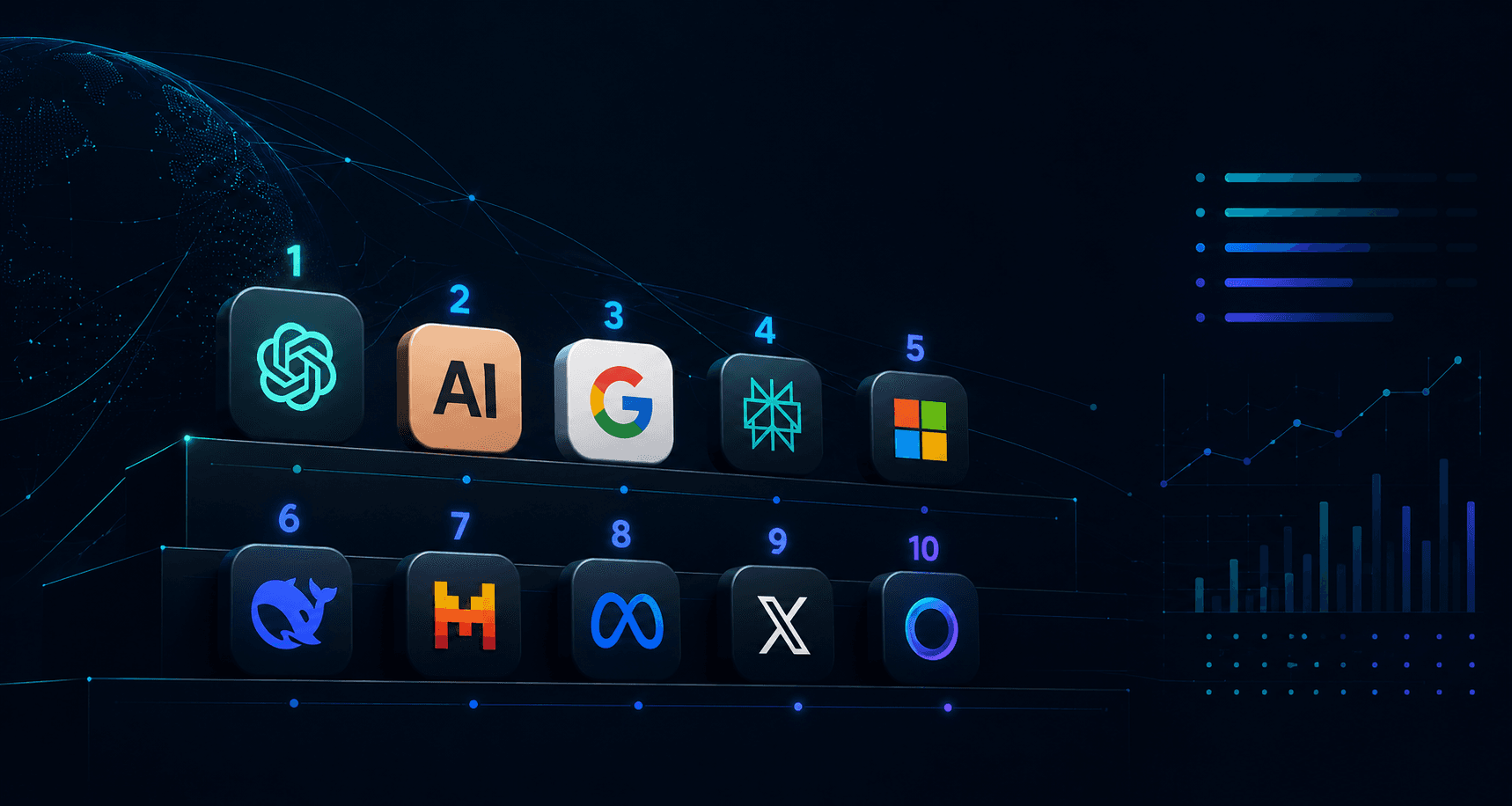
Top AI Chat Platforms Ranked
ChatGPT
OpenAI
Best overall AI ecosystem and productivity platform
ChatGPT leads the market through broad capability coverage including writing, coding, multimodal workflows, enterprise productivity, custom GPTs, data analysis, and AI workflow integration.
Gemini
Google ecosystem integration and multimodal AI
Gemini is strongest when integrated into Google Workspace, search workflows, research tasks, and multimodal productivity across Google's ecosystem.
Claude
Anthropic
Long-context reasoning and structured analysis
Claude excels at thoughtful writing, long-document reasoning, policy analysis, research synthesis, and structured enterprise workflows.
Perplexity
Perplexity AI
AI-powered research and answer discovery
Perplexity combines AI interaction with live web discovery, making it highly effective for research, sourcing, and rapid information gathering.
Microsoft Copilot
Microsoft
Enterprise Microsoft ecosystem integration
Copilot is valuable for organizations already deeply integrated into Microsoft 365, Azure, Teams, and enterprise productivity infrastructure.
DeepSeek
DeepSeek
Open-model innovation and technical workflows
DeepSeek has gained attention for technical reasoning, coding workflows, and aggressive open-model competitiveness.
Grok
xAI
Real-time internet-connected interaction
Grok focuses on conversational AI tied closely to the X ecosystem and real-time information interaction.
Mistral Le Chat
Mistral
European AI ecosystem and lightweight workflows
Mistral offers fast AI interaction and strong open-model positioning for organizations seeking alternatives to US-centric ecosystems.
Meta Llama
Meta
Open ecosystem model deployment
Llama powers many self-hosted and enterprise-customized AI systems due to its open ecosystem availability.
Meta AI
Meta
Consumer-scale AI integration
Meta AI focuses heavily on social ecosystem integration and broad consumer-facing AI experiences.
Evaluation Criteria
How these AI platforms were evaluated
Reasoning quality
Coding capability
Enterprise workflow support
AI ecosystem maturity
Multimodal capability
Research effectiveness
Workflow automation potential
Business integration readiness
Market Analysis
Major enterprise AI trends shaping 2026
The market is consolidating around ecosystems
The strongest AI platforms are no longer just standalone chatbots. They are becoming operating systems for productivity, coding, research, and automation.
AI workflows matter more than benchmarks
Many organizations choose tools based on workflow compatibility rather than isolated model benchmark scores.
Multi-model strategies are becoming common
Businesses increasingly use multiple AI systems together instead of relying on a single platform for every task.
Strategic Recommendation
Choose AI platforms based on workflow architecture.
ChatGPT currently leads as the most complete enterprise AI ecosystem due to its broad operational flexibility across coding, writing, multimodal workflows, custom GPTs, automation, and data analysis.
Claude remains one of the strongest reasoning-focused systems for structured writing, long-context analysis, and careful enterprise document workflows.
Gemini continues improving rapidly through Google's ecosystem advantages, especially for Workspace productivity and research workflows.
The most advanced organizations increasingly use multiple AI systems together instead of depending entirely on one platform.
Final Verdict
The AI platform market is shifting from tools to ecosystems.
The strongest AI platforms are becoming productivity layers, automation layers, coding layers, and enterprise workflow systems all at once. Organizations that treat AI strategically instead of experimentally will gain the biggest long-term operational advantage.
Turn insight into workflow
Need help applying this inside real operations?
AIBX helps individuals and teams turn AI knowledge into governed workflows, reusable prompts, and practical implementation systems.
Related Articles
Continue Reading
Comparisons & Buying Guides
Claude vs ChatGPT for Business | AIBX
A practical enterprise comparison of Claude and ChatGPT across writing, coding, reasoning, workflow automation, and business adoption.
AI Coding
Best AI Coding Tools for Developers and Engineering Teams
A practical enterprise guide to the best AI coding tools for software development, code review, debugging, refactoring, and agentic engineering workflows.
AI Tools & Platforms
The Complete Guide to ChatGPT & Codex Models (2026)
A practical guide to GPT-5.6, reasoning effort, Codex, ChatGPT Work, Sites, Skills, and Scheduled Tasks for enterprise teams.
Comparisons & Buying Guides
ChatGPT & Claude Projects: Setup, Settings and Memory Guide
Set up ChatGPT and Claude Projects: naming, instructions, files, memory, sharing and privacy, with verified differences between the two.